

Every second counts: Parental instincts, Pediatric Readiness save newborn
In the early morning hours in January 2025,
Brice and Grace Brown faced every parent's worst fear when their newborn son,
Kolson, suddenly stopped breathing. Their infant son was in critical distress.
Thanks to their fast action — and the specialized pediatric ready care team at
Reid Health — Kolson's thriving today.
Infants and children in emergencies need
specially trained providers, child-sized equipment, and age-appropriate
medications. Reid's Pediatric Readiness Certification ensures expert care for
children facing severe or unexpected emergencies. That morning, the Browns were
met by Emily Kraft, MD, EMS Medical Director for Reid, who immediately
recognized the severity of Kolson's condition.
Dr. Kraft and her team stabilized Kolson and
arranged for critical transport to Indianapolis, but beyond emergency care,
they supported Brice and Grace with reassurance and comfort amid the chaos.
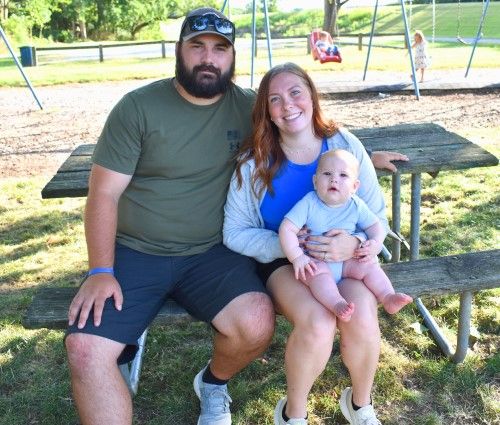
Nearly a year later, Kolson's thriving as his parents, along with grandparents
Kay and Tim Brown, share their experience in the hope it empowers other parents
to trust their instincts, and seek help when something feels off.
The beginning
Kolson was born at 35 weeks St. Vincent's in
Indianapolis. Grace's delivery had complications, but Kolson initially seemed
fine.
"As soon as he was born, he laid on my chest
for maybe five minutes," she said. "Then he started struggling to breathe."
Kolson was taken to the NICU, where he stayed
for five days. After, he went home to Richmond to meet his two siblings, then ages
2 and 3.
Within a week, despite their precautions,
Kolson developed RSV. His parents took him to his pediatrician who explained what
symptoms to watch for such rapid breathing and fatigue. That night, his
symptoms worsened, leading them first to Reid and then to St. Vincent's. While
there, he didn't require oxygen.
"He did great all day, so they sent us home
with more of what to look for like the retractions, nasal flaring, and the
hoarse breathing sounds," Brice said.
Two days later, Kolson began having brief
pauses in breathing. His color changed slightly to a blue tone, but when they
roused him, he seemed normal. Around midnight, the Owlet sock on his foot
showed fluctuating oxygen levels in the mid-80s. They adjusted it and decided
to take turns staying awake to watch him.
Critical moments
Grace went to sleep around 2 a.m. while Brice watched
Kolson. At 4:30 a.m. the Owlet alarm sounded continuously, showing oxygen
levels in the 70s.
They tried to wake him and checked the monitor,
then decided to call an ambulance.
"He was very pale," Brice said.
Though CPR-trained for adults, Brice hesitated
to start compressions since Kolson still had a strong pulse. As emergency
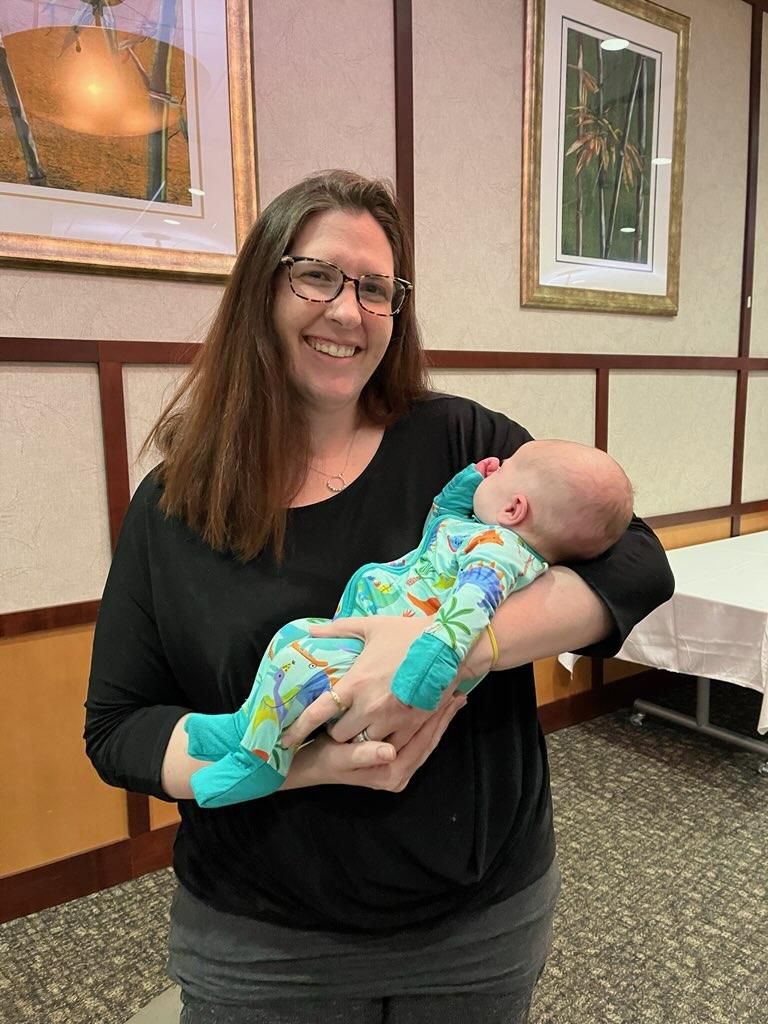
lights approached, Brice's mother, Kay — a former certified EMT — arrived
first. He'd called her to watch their two children so they could go with Kolson
to the hospital.
When she walked in, Kolson was limp in their
arms.
"I didn't hesitate," she said. "I just took him
and started a sternal rub and pinched him to get a response."
He gave a faint whimper. It was just enough.
When the ambulance arrived, Kay handed Kolson
to the medics. Grace rode with him to Reid while his oxygen levels improved.
At Reid's ER, Grace stayed with Kolson. She
talked with Dr. Kraft and the ER staff about what was happening.
"Then time just seemed to crawl," Brice said. "I
have no idea how long it was before decisions were made and actions taken."
Dr. Kraft said things began changing the first
few minutes.
"He didn't look great, but it wasn't quite at
that emergency level yet, so we were getting a lot of things going. Within
those first few minutes, he had another apneic episode where he wasn't
breathing," she said.
That episode triggered a drop in Kolson's
oxygen saturation, prompting the ER team to shift from a calm pace to a much
more urgent one, Dr. Kraft said.
A setback
Dr. Kraft let the Browns know Kolson was
struggling and needed to be intubated to help him breathe.
"She asked us to follow a nurse to the
consultation room," Brice said. "It felt like eternity in there."
While they waited, a respiratory therapist
reassured them staying awake to watch over Kolson made a difference, then
escorted them to his room.
"It was a different type of feeling, going back
there and seeing him like that," Grace said.
They soon learned Lifeline was on its way to
fly him to Indianapolis for specialized care. When the flight team arrived, the
family was updated on what would happen during transport to Peyton Manning
Children's Hospital.
"He was struggling altogether and he looked
terrible," Brice said. "We were watching the monitors and it kept dropping. And
then the flight nurse said she wasn't getting breathing sounds."
Their world stopped.
The Browns were ushered out of the room so the
medical staff could quickly work to restart Kolson's breathing. Brice watched
as the team worked.
"It felt like hours," he said. "Then everything
just stopped. The doors opened, and everyone walked out."
The team found Kolson's breathing tube had
clogged, requiring reintubation before flight. Once he was stabilized, he was
carefully moved into an incubator and taken to the helipad.
Recovery and moving forward
"We just stood there. There were so many
emotions," Grace said.
After takeoff, Brice and Grace planned to grab
caffeine and food before the 80-mile drive to Indianapolis. Dr. Kraft was
waiting with snacks and drinks for them. Handing over the goodies, Dr. Kraft
asked when he'd last eaten or slept, and told him he shouldn't be driving, but
as a parent herself, admitted she would've done the same.
Kolson spent nine days in the Pediatric
Intensive Care Unit (PICU) in Indianapolis. He was on a ventilator for nearly
five days before moving to high-flow oxygen. That's when medical staff
discovered a congenital heart defect, a Ventricular Septal Defect (VSD), that
might not have been detected otherwise. He also had a notched vocal cord,
likely from reintubation.
Brice later shared their story on social media
to encourage other parents to be proactive. He also noted the difference in
preparation and care between their first and second ER visits, crediting Reid's
Pediatric Readiness certification.
Dr. Kraft explained Kolson had both RSV and
sepsis, a serious bacterial infection. She credited the Browns for following
their intuition.
"They did a really good job of recognizing something was different. I always tell parents: You know your children best. When you see something that isn't right, go with your gut. They were on it every single time to recognize something's not right and that they needed to take that next step." -- Emily Kraft, MD, EMS Medical Director for Reid Health
Kolson spent 19 of his first 31 days in the
hospital. He and his parents relied on each other and their support system to
get through it.
"This brought us closer as parents and as a couple," Grace said.
"Stay calm and lean on your support system. Having people you trust around you helps you make better decisions," Brice said.
Tim offered advice from his years as a
firefighter and EMT: "If you don't know, it's time to go."
Kay added, "Always advocate for your child."
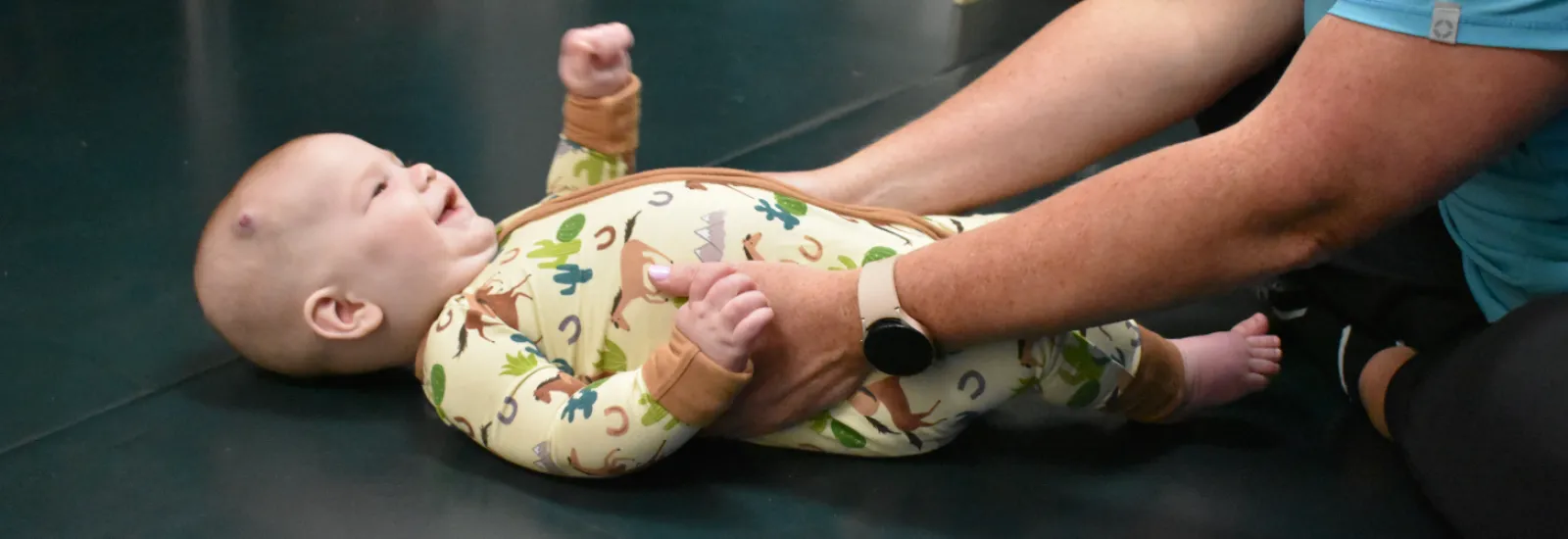
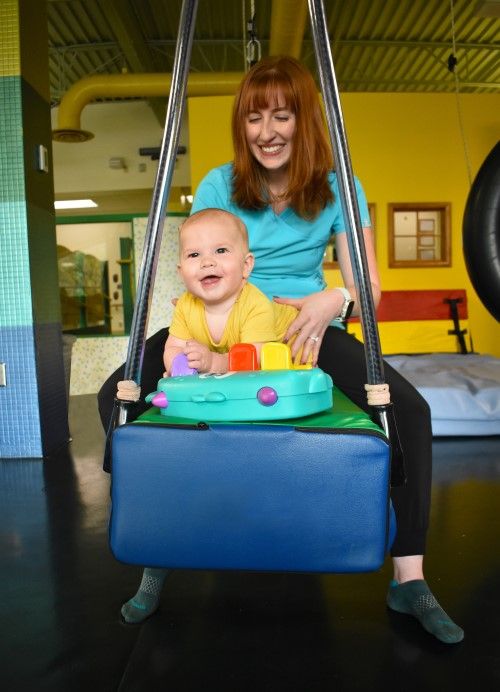
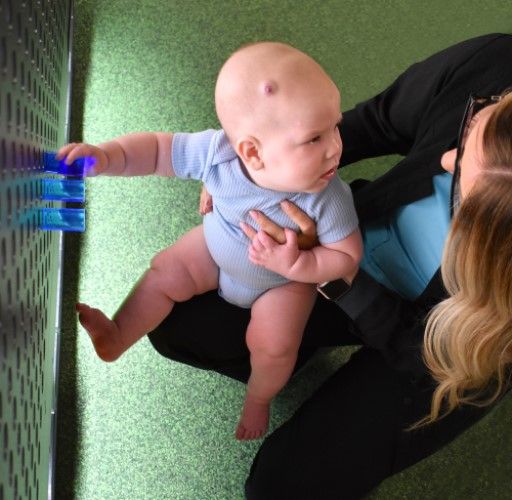
Kolson continues to grow stronger with help
from Reid Pediatric Therapy, including physical, occupational, and speech
therapy to support eating, breathing, and developmental milestones. Each one is
a celebration.
Kolson's story is a reminder for caregivers:
When something feels off, don't wait. Speak up, seek help, and never
underestimate the power of intuition.
About Pediatric Readiness
Reid
Health is designated as a Pediatric Ready Level Facility by the Indiana
Emergency Medical Services for Children (IEMSC), recognizing its ability to
handle pediatric emergencies with expert care.
This four-year designation, based on the
National Pediatric Readiness Project (NPRP) Assessment, requires hospitals to
maintain specialized pediatric equipment, supplies, medications, and staff
training tailored to children's unique needs.
Reid EMS ambulances and the Emergency
Department are equipped and certified to handle pediatric emergencies,
including neonatal resuscitation.